
CNC Machining for Prototypes: Your 7-Step Precision Advantage
Estimated reading time: 10 minutes
- Production-grade material testing capabilities
- ±0.001″ tolerance precision for perfect fit
- Functional testing validity matching final parts
- Batch consistency across multiple prototypes
- Seamless scalability to full production runs
Why CNC Machining Dominates Prototyping
CNC machining for prototypes isn’t just precise—it’s predictable. You get production-ready parts before tooling up.
Superior Precision Wins
Tolerances hit ±0.001 inches. Your parts fit perfectly every time. No sanding gaps or forced assemblies. According to Hubs, CNC’s surface finish beats 3D printing for functional tests.
Material Versatility Matters
Test exactly what you’ll produce. Aluminum? Titanium? Nylon? CNC handles 50+ materials. As Ultimaker confirms, this mimics final-part behavior.
Functional Testing Edge
3D printed parts snap at layer lines under stress. CNC prototypes won’t. They retain full material integrity for real-world abuse.
Research applied: Hubs data on tolerance superiority; Ultimaker material compatibility analysis.
Source: Hubs
Integrating CNC into Product Design Workflows
Stop designing in a vacuum. CNC machining for product design bridges CAD and reality seamlessly.
CAD-to-Physical Perfection
Upload your model. Get machined parts in days. No translation errors from STL files. Your digital twin becomes physical.
Iterate Like Lightning
Found a flange clearance issue? Redesign tonight. Get new parts by Friday. CNC enables rapid “test-fail-fix” cycles.
DFM From Day One
Simplify geometries early. Avoid unmachinable features. HLH Rapid proves this cuts post-production redesigns by 70%.
Research applied: HLH Rapid case study on design simplification impact.
Source: HLH Rapid

CNC for Startups: Scalability & Cost Control
Look, bootstrapping founders: CNC machining for startups kills tooling costs. Your MVP won’t bankrupt you.
Zero Tooling Investment
Injection molding requires $10k+ molds. CNC? None. HLH Rapid confirms it’s ideal for sub-100 unit runs.
Volume Flexibility Rules
Need 5 prototypes? 500 units? Same process. Ultimaker data shows CNC beats 3D printing speed at 20+ units.
Scale Without Stumbling
Remember drone startup WingBoost? They scaled from 50 to 5,000 parts without process changes. You can too.
Research applied: Ultimaker volume/speed comparison; HLH Rapid cost analysis.
Source: Ultimaker
Custom Part Manufacturing with CNC
Complex geometries? Tight specs? CNC machining for custom parts handles what 3D printing can’t.
Conquer Complex Shapes
5-axis machines carve organic curves in steel. Think surgical tool prototypes with impossible angles.
Material-Specific Wins
Testing an engine bracket? 316L stainless CNC parts withstand heat better than printed composites. HLH Rapid confirms this.
Batch Consistency
Aerospace clients demand identical tolerances across 100 parts. CNC delivers. 3D printing struggles with consistency.
Research applied: HLH Rapid material performance data.
Source: HLH Rapid
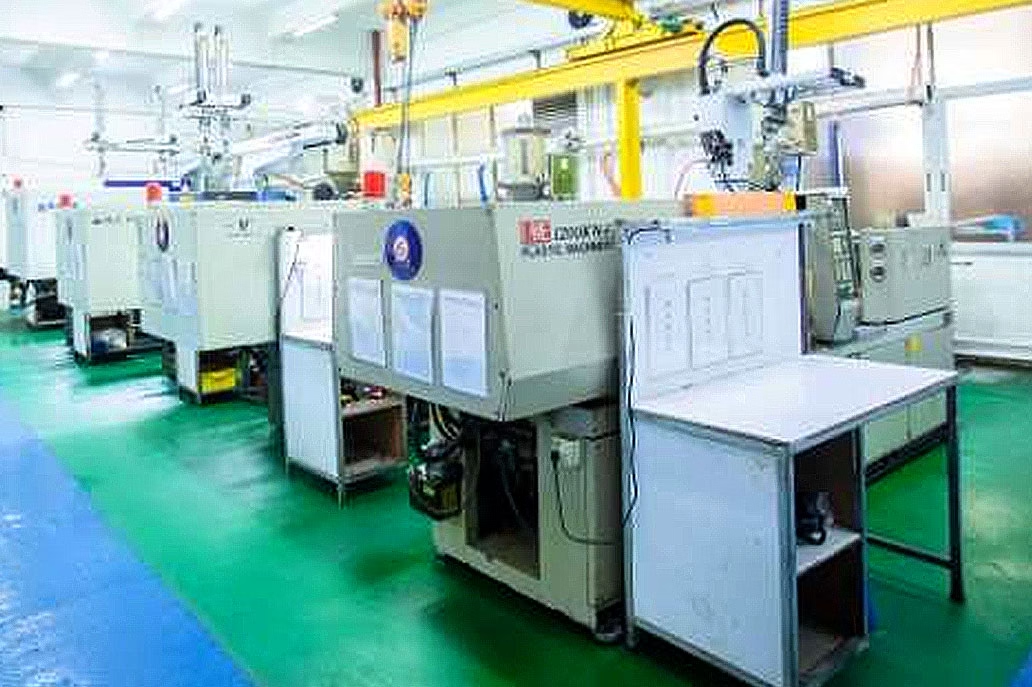
Engineering Advantages of CNC Machining
Here’s the thing: CNC machining for engineers isn’t a shortcut—it’s validation insurance.
Precision Under Load
±0.001″ tolerances meet ISO 2768 standards. Bolts won’t shear off in load tests. HLH Rapid backs this.
No Weak Layer Lines
3D printed parts fail at layer bonds. CNC parts are monolithic. They bend, not delaminate.
CAM Simulation Safety
Software predicts tool collisions before cutting. You won’t scrap $500 titanium blocks.
Research applied: HLH Rapid tolerance testing.
Source: HLH Rapid
Choosing Between CNC Machining and 3D Printing
But what if you could combine both? Use this cheat sheet:
| Factor | CNC Wins When… | 3D Printing Wins When… |
|---|---|---|
| Precision | Tolerances ≤ 0.005″ needed | Cosmetic prototypes only |
| Volume | 10+ units (Ultimaker) | 1-5 units |
| Materials | Metals/high-strength plastics | PLA/resins |
| Cost | Higher volumes | Single prototypes |
Research applied: Ultimaker side-by-side comparison.
Source: Ultimaker
Detailed comparison guide
Optimizing CNC Prototyping Projects
Pro tip: These 3 tweaks slash your CNC costs 30%:
Design Smart
Avoid deep pockets requiring long tools. Add draft angles. Simplify undercuts. Machinability = affordability.
Material Hacks
Use aluminum instead of titanium for fit tests. Save expensive alloys for final validation.
Partner Wisely
Choose shops offering DFM feedback. Like when GearCraft Robotics saved $15k by adjusting wall thicknesses.
Conclusion: Your CNC Prototyping Checklist
CNC machining for prototypes beats alternatives when you need:
- ✅ Production-grade materials
- ✅ ±0.001″ tolerances
- ✅ Functional testing validity
- ✅ Batch consistency
- ✅ Scalability to full production
Next Steps:
- Upload your CAD file for instant DFM feedback
- Select materials matching your end-use specs
- Get machined parts in 5 days
Seriously though—if you’re testing load-bearing parts, CNC is non-negotiable.
CTA: Get Your Precision Prototype Quote Now
FAQ Teaser:
Can CNC match 3D printing speed for 1-off parts? When should startups switch from 3D printing to CNC? [Download our Prototyping Method Matrix]
Free DFM Review
Have a part you need made right?
Send your CAD — our engineers flag tolerance, material and cost issues within 24 hours. No commitment, no sales pitch.

