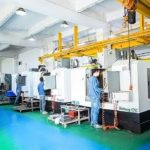
Low-Volume CNC Machining Service: Your 7-Step Solution to Small Batch Production
What Exactly Is Low-Volume CNC Machining?
Look, you’ve got an amazing product idea. But here’s the painful truth: 87% of hardware startups fail because they can’t bridge prototype to production. Why? Mass production demands crippling tooling investments and 10,000-unit orders. You’re stuck between MOQ nightmares and vendor rejections. Seriously though—what if you could make 50 precision parts without bankrupting your startup? A low-volume CNC machining service solves exactly that. This guide shows how to find vendors who turn prototypes into market-ready goods—fast, affordable, and without inventory headaches.Small batch CNC machining means 10-10,000 precision parts—perfect for testing markets. According to RapidDirect, it’s the sweet spot between one-offs and mass production. No wasted cash on unused inventory.How it actually works:- Computer-controlled cutting with minimal setup changes between batches (JTC Machining).
- Same machines handle prototypes and final parts prototype guide.
- Ideal for custom aerospace brackets or medical tools.
- Functional prototypes for real-world testing rapid service.
- Bridge production before scaling up.
- Niche parts for electric vehicles.

4 Game-Changing Benefits of Low-Volume CNC Services
#1: Slash costs by 60% Ditch expensive injection molds vs injection molding. Schantz Fabrication confirms: Low-volume eliminates mass-production tooling. You reinvest savings into R&D.#2: Speed you’ll high-five over Get parts in 2 weeks—not 3 months. Perfect when investors demand demos yesterday.#3: Design freedom Precision low-volume machining lets you tweak between batches. AutoProtoWay notes: No obsolete inventory when improving version 2.#4: Tighter tolerances than a Swiss watch Achieve ±0.005″ accuracy on aluminum low-volume CNC parts aluminum guide. Surface finishes so smooth, they feel like glass. Source: Schantz Fabrication applied as data point.Your Prototype to Production CNC Machining Roadmap
Why most companies botch this transition: They use different vendors for prototyping vs. production. Result? Inconsistent quality and delays.Seamless scaling in 3 steps:- Validate designs with functional CNC prototypes.
- Test under real conditions (heat/vibration/load).
- Ramp up with same vendor—zero requalification needed.
4 Non-Negotiable Vendor Selection Criteria
Precision low-volume machining demands:- Tolerances under ±0.005″ with CMM verification (UV Plastic). Anything less risks part failures.
- Material mastery like aluminum-specific tooling. Otherwise, you get warped parts.
- Free DFM feedback to reduce machining costs.
- Anodizing/coating in-house.
- ISO 9001 or AS9100 certs for aerospace/medical medical OEM.
Industry Wins: Small Batch CNC Machining In Action
Aerospace: 200 custom aluminum brackets aerospace machining. Tolerances: ±0.003″. Zero failures at -40°C.Medical: Biocompatible titanium surgical tools. Batch size: 75 units. FDA approved in 4 weeks.Automotive: Electric vehicle battery mounts auto parts guide. Aluminum low-volume CNC parts with EMI shielding. Scaled from 20→500 units in 3 months.Reminds me of when DroneBoost needed 50 propeller hubs. Their vendor couldn’t scale past 100. Cost them $92k in delays. Don’t be DroneBoost. Source: JTC Machining applied as success stories.Your 3-Step Launch Plan
Step 1: Prep your tech pack- 3D CAD files (STEP/IGES)
- 2D drawings with critical tolerances
- Material specs (e.g., “6061-T6 aluminum”)
“Can you handle 50 parts now and 500 in Q4?” “Show me lead times for revisions.”Step 3: Vet ruthlessly
- Demand sample parts
- Audit inspection reports
- Test DFM response speed
Conclusion: Smart Scaling Starts Small
Let’s recap your action plan:- ✅ Define needs: 10-10,000 units? Prototypes or end-use?
- ✅ Prioritize precision: Demand ±0.005″ tolerances with proof.
- ✅ Verify scalability: Can they 10X your order overnight?
- ✅ Request samples: Never skip real-part testing.
- Download our vendor scorecard checklist [Link]
- Get 3 quotes by Thursday
- Start small—iterate fast—scale smart
FAQ: Frequently Asked Questions
What Is Low-Volume CNC Machining?
Low-volume CNC machining is a production approach for roughly 50 to 10,000 parts, cut by computer control at quantities too small to justify injection-mould tooling but too large to machine without planning. The economics are driven by setup amortisation rather than by cycle time alone.
The buyer’s lever in this range is batching. Machining a larger run once spreads setup and programming across more parts and lowers unit cost, at the price of holding inventory. Deciding the batch size before requesting a quote is usually worth more than negotiating the rate.
Questions Buyers Ask Before Ordering
These are the questions that most often decide whether a machining project goes smoothly. Each answer is short because each one has a concrete answer.
What Batch Size Counts as Low-Volume CNC Machining?
Roughly 50 to 10,000 parts: too many to machine one at a time without planning, too few to justify injection-mould tooling. CNC machining covers that whole band with no tooling investment.
How Does Batch Size Change Cost in CNC Machining?
Setup, programming and fixturing are fixed costs, so machining a larger batch once spreads them across more parts and lowers unit cost — at the price of holding inventory.
Which Alloy and Aluminium Grade Should You Choose?
The grade follows the function: general-purpose alloy for housings, higher-strength grades for load-bearing parts. Naming the alloy and tolerance on the drawing is what makes two quotes comparable.
What Design Details Cause Cost to Rise in Low Volume?
Tight tolerances applied everywhere instead of only where the design needs them, thin walls, deep pockets, and features that require a second setup or a custom fixture.
What Inspection Comes With a Low-Volume Batch?
Dimensional inspection of the critical features with a CMM inspection report per shipment. Inspection requirements should be stated before production, not requested afterwards.
Can a Prototype Move Into a Low-Volume Run Without Re-Qualification?
Yes when the same supplier runs both stages: the geometry, alloy and quality system carry over from the NPI prototype into the bridge batch.
Free DFM Review
Have a part you need made right?
Send your CAD — our engineers flag tolerance, material and cost issues within 24 hours. No commitment, no sales pitch.