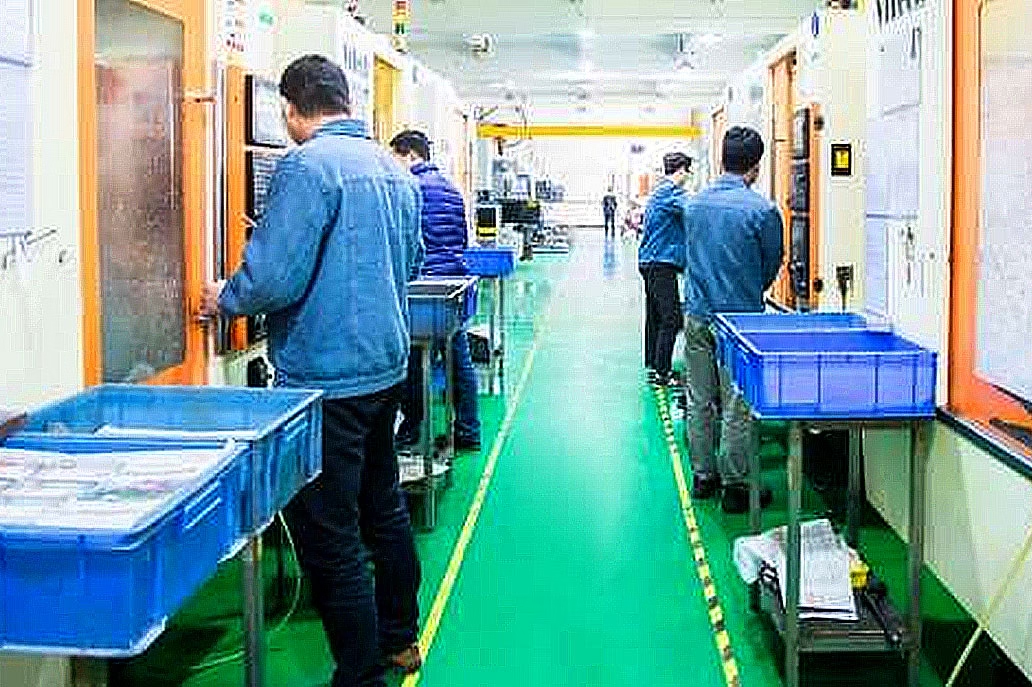
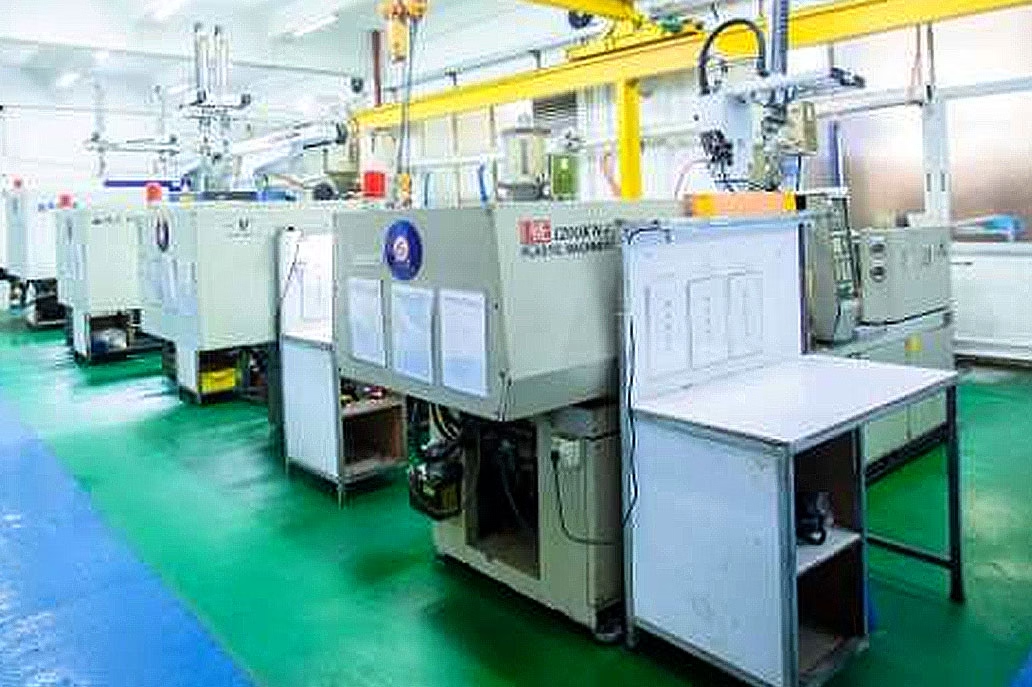
The cheapest CNC part is the one designed right the first time. We machine over 15,000 parts a month in our Dongguan factory — across 50+ CNC machines (Haas, DMG MORI, 5-axis) — and the single biggest cost driver is not material or tolerances. It is design decisions — and these seven CNC design tips can reduce CNC machining costs 30-50% before the part ever hits our shop floor.
Every week we receive CAD files that would cost 40-60% less to machine with two or three small changes. Here are the seven we flag most often — with real numbers from parts we have actually machined.
1. Keep Pocket Depth Under 4x Tool Diameter — Reduce CNC Machining Costs at the Design Stage
The Rule
Pockets deeper than 4x the cutter diameter need long-reach tooling. These tools deflect under load — the machinist has to slow feed rates, take lighter passes, and often swap to specialty holders.
Last month we quoted an aluminum enclosure — for many of these parts, our CNC machining service catches deep-pocket issues at the DFM stage. A recent enclosure had a 32mm-deep pocket and 6mm corner radius. Reducing the depth to 24mm (4x) cut 22 minutes off the cycle time — a 35% cost reduction with zero functional change — exactly the kind of design optimization that helps reduce CNC machining costs.

2. Add Fillets to Every Internal Corner — A Simple Design Change That Cuts CNC Costs
Why Fillets Matter
Sharp internal corners are physically impossible with round cutting tools. The machinist must use progressively smaller tools to approach 90 degrees — a process called corner picking that adds setup time for no functional gain.
A 3mm fillet (standard for 6mm end mills) lets us rough and finish with one tool. We have seen parts where adding fillets eliminated an entire tool change — saving 8-12 minutes per part on a 50-piece batch.
3. Reduce Setups — Every Re-Fixture Adds Machining Cost
Setup Cost Breakdown
Every time a part leaves the vise, we stop the spindle, re-indicate, and verify alignment. Setup changeover is pure cost:
- 10-20 minutes of machine idle time per setup
- New soft jaws or fixture plates
- Tolerance risk from re-clamping — a 0.02mm shift across setups is common
We recently machined a bracket with threaded holes on three faces. The engineer moved two hole patterns to one face — two setups instead of three, 28% cheaper.
4. Standardize Your Hole Sizes — Cut CNC Machining Costs With Standard Tooling
Standard vs Custom Tooling
Every unique drill or tap size is a tool change — 30-60 seconds of non-cutting time each. A part calling for M3, M4, M5, and M6 tapped holes needs four tap changes. Use M4 and M6 only, and you just eliminated two operations.
Also: through-holes over blind holes whenever possible. Blind holes trap chips, need peck drilling cycles, and complicate tapping. Through-holes clear naturally — faster and cleaner.
5. Only Tight-Tolerance What Actually Mates — The Biggest CNC Cost Driver
Where Tolerances Actually Matter
We machine to 0.005 inch (0.125mm) as standard across our shop. Tighter tolerances force finishing passes, temperature-controlled measurement, and higher scrap rates.
A simple rule: if the feature does not mate with another precision component, standard tolerance is fine. One customer saved 22% on a 200-piece order just by relaxing four non-critical dimensions from 0.01mm to 0.1mm.
6. Walls Under 0.8mm Will Fight You — Thin Walls Drive Up CNC Machining Costs
Minimum Wall Thickness Guide
Thin walls vibrate during cutting. Aluminum under 0.8mm, steel under 0.5mm — the part chatters, tool life drops, and walls can warp from residual stress when unclamped.
If your design genuinely needs thin sections, add ribs or gussets for stiffness. We have seen parts where two 1.5mm ribs replaced a 0.6mm wall — same function, 40% faster cycle time.

7. Send Us Your CAD Before You Finalize Tolerances — Free Review That Cuts CNC Costs
Why Pre-Review Saves Money
We run DFM (Design for Manufacturability) reviews every day. An engineer checks your model against our 50+ CNC machines — flagging deep pockets, suggesting fillet radii, identifying unnecessary tight tolerances, and recommending materials if your current choice is driving up cost.
You get back a marked-up drawing with specific recommendations — typically same-day or next morning. Fixed-price quote after review. No surprises. No sales call. No obligation. We do this because it produces better parts and eliminates surprises on both sides.
What we need from you: STEP or IGES file + material preference + quantity. Upload here or email us directly.
What Each Change Saves — Based on Our Shop Data
| Change | Typical Saving | When We Flag It |
|---|---|---|
| Limit pocket depth to 4xD | 15-35% | Every deep cavity drawing |
| Add internal fillets (3mm+) | 10-20% | Sharp-cornered pockets |
| Reduce setups | 20-40% | Multi-face threaded holes |
| Standardize hole sizes | 10-15% | 3+ unique tap sizes |
| Relax non-mating tolerances | 15-25% | 0.01mm on non-critical dims |
| Thicken walls above 0.8mm | 10-20% | Sheet-thin sections |
| DFM review before locking design | 20-40% | Every new customer |
Start with fillets, tolerances, and hole standardization — those three alone can save 25-45% on most parts. Then tackle setups when you move to production quantities.
Our CNC machining service runs 50+ machines 24/7 in Dongguan. ISO 9001 certified. No trading middleman — you work directly with the shop floor.