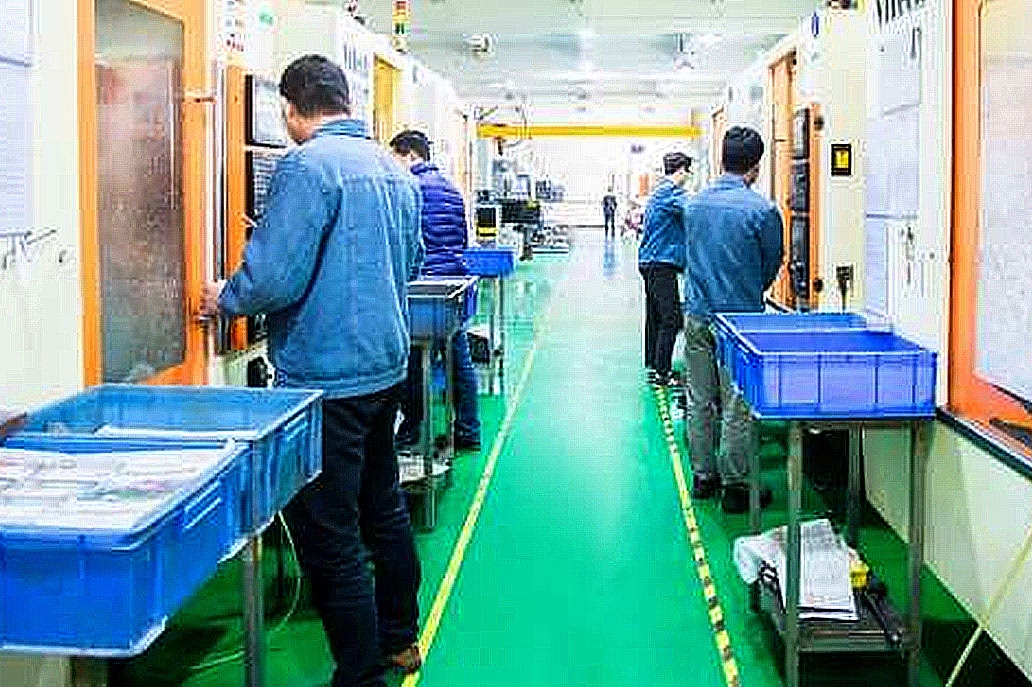
Small batch CNC machining in China does not have to mean hidden tooling fees, long lead times, or quality roulette. We run 1-piece to 500-piece orders on our CNC machining floor — no segregated on the same Haas and DMG MORI machines that handle our 10,000-part production runs — no segregated "prototype line" with different tolerances. Here is how it works, what it costs, and how to spot a real small-batch shop.
Why Most Factories Reject Small Batches — The Small Batch CNC Reality in China
The Setup Cost Problem
Set-up time kills margins. A CNC machine takes 30-60 minutes to program, fixture, and tool for a new part. If you only order 10 pieces, the factory needs to cover setup time. That is why most shops impose MOQs or tooling fees — and why finding a genuine small batch CNC machining partner matters. The factory earns 10x unit price but spends the same set-up cost as a 500-piece order. The math does not work for high-volume shops—which is exactly why you need a supplier built for low volume from day one.
This is why the same part gets quoted at $50/piece for 10 units and $8/piece for 500. The machining time per part is identical. The difference is entirely in amortizing the set-up cost across your order quantity.
At QDJ-Prototype, we reserve dedicated CNC capacity for orders under 50 pieces. Your parts start within 24 hours of CAD approval. See our CNC machining service for full material and tolerance specs.
Real Small-Batch CNC Pricing in China (2026)
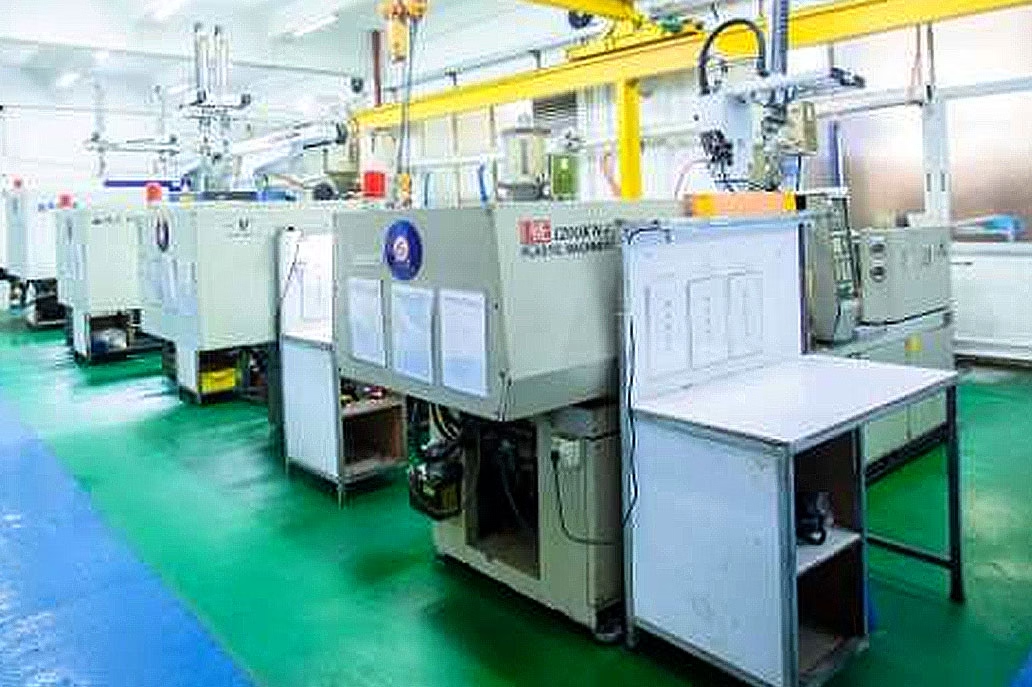
What Small Batch CNC Machining Actually Costs
For a typical aluminum part (50x50x30mm, 3-axis):
- 1 unit: $80-150 (you pay full set-up)
- 10 units: $15-35 per unit
- 50 units: $8-20 per unit
- 100+ units: $5-12 per unit
No tooling fee if your part fits standard fixturing. Complex parts needing custom jigs add a one-time $50-200. The single biggest cost driver is not material or machine time—it is how many setups your part requires. Reduce setups, reduce cost.
Three Signals of a Real Small-Batch CNC Shop
How to Verify Before You Send CAD
- They ask engineering questions before quoting. A real shop checks undercuts, thin walls, tight tolerances, and material availability. If they quote your CAD in 10 minutes without questions, they did not look at your part.
- They publish their equipment list with brand, model, and year. Haas VF-2 2019 tells you something. Unknown brand CNC from 2008 tells you something else.
- Their case studies have real numbers. Not “we helped a client save costs” but “we machined 50 aluminum enclosures with plusminus 0.02mm flatness, delivered in 6 days.”
One more thing: the biggest risk with small-batch CNC is not quality—it is getting ghosted. A shop that quotes without questions will disappear the moment a problem surfaces. The right shop asks questions first, quotes second.
Materials Guide for Small-Batch CNC
Materials We Stock for Small Batch CNC Machining
Aluminum 6061: Best choice. Widely stocked, easy to machine, no supplier MOQ. Stainless 304/316: Slower machining means higher unit cost but perfectly doable in low quantities. PEEK and engineering plastics: High material cost but machinable in low volumes. Titanium: Difficult for small batch. Most shops want 50+ piece MOQ due to tool wear and raw material cost. For prototype runs under 10 pieces, stick with aluminum unless your application absolutely requires something else.
How 7-Day Turnaround Is Possible
Our Small Batch CNC Workflow
The bottleneck is not machining time. It is scheduling. A shop running 500-piece jobs cannot pause to squeeze in your 10-piece order. Shops specializing in small batches reserve dedicated capacity. Your order starts within 24 hours of CAD approval, not “next week when we have a slot.” This is the difference between a volume factory that tolerates small orders and a shop actually built for them.
Get a Free DFM Review Before You Commit
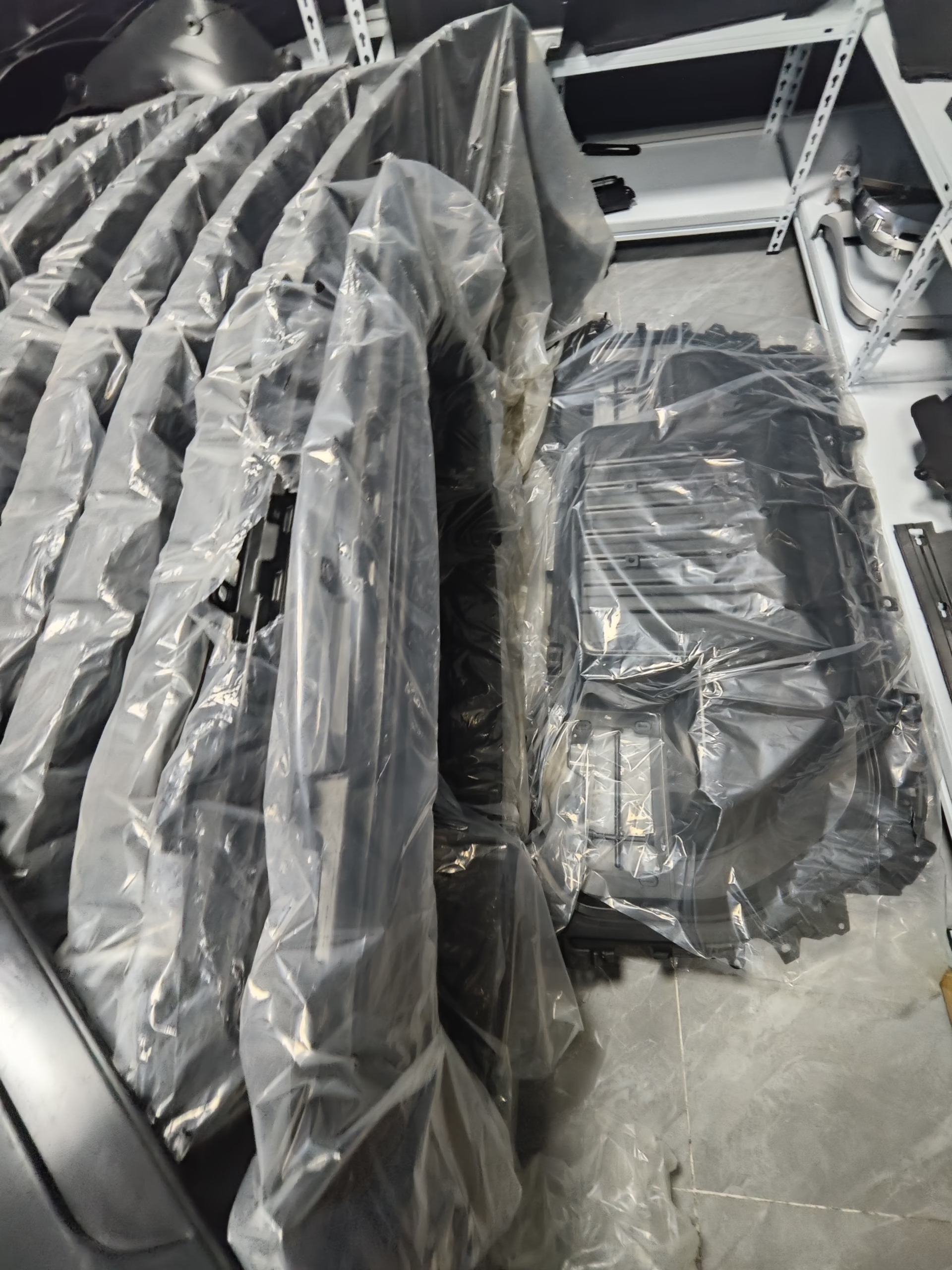
A proper Design for Manufacturability review catches issues before they become scrap parts. It is free, takes 24 hours, and tells you exactly what can be improved in your design for better cost and quality. Send your CAD for a free DFM review.
Real example: hardware startup went from sketch to 50 shipped units in 14 days. Or verify our ISO 9001 certification for yourself before sending anything.