Metal Prototype Casting: Your Ultimate Solution for Custom Machinery & Industrial Parts
11-minute read
Introduction
Ever had machinery fail because a $5 part snapped under pressure? You’re not alone. Over 60% of industrial downtime stems from custom component failures, according to manufacturing surveys. When off-the-shelf solutions buckle under unique demands, your projects stall. Costs balloon. Deadlines vanish.Here’s the thing: metal prototype casting bridges that gap between fragile compromises and rugged, tailor-made parts. This process lets you test and refine gear housings, valves, or conveyor components before full production. No more guesswork. Just precision-cast parts built for your machinery’s brutal reality.By the end of this guide, you’ll know exactly how to leverage metal casting for prototypes and end-use industrial components. We’ll tackle design validation, material choices, and cost hacks—all backed by real data. Ready to transform frustration into reliability? Let’s dive in.(Source: Patriot Foundry – Applied as data point on bespoke part sourcing challenges)The Struggle with Weak Parts? Metal Casting Delivers Strength
Off-the-shelf brackets cracking? Gears wearing out prematurely? Standard components often fail in extreme conditions. Metal casting for machinery parts solves this by merging durability with customization.How It Works (The 30-Second Explainer)
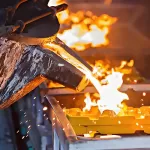
- Melt metal (aluminum, steel, or bronze)
- Pour into a mold matching your part’s specs
- Cool, solidify, and finish
Why Your Industrial Gear Needs This
- Toughness: Cast parts absorb shock better than machined ones
- Cost Smarts: Reusable molds slash per-unit prices
- Material Freedom: From lightweight aluminum to corrosion-resistant steel alloys

Why Guesswork Fails: Prototyping Your Castings First
Skipping prototyping is like skydiving without checking your parachute. Metal prototype casting catches design flaws before they cost you thousands.Sand vs. Investment Casting: Your Method Cheat Sheet
- Sand Casting: Cheap and fast for bulky parts (e.g., engine blocks)
- Investment Casting: Laser-like precision for complex shapes (e.g., aerospace valves)
3 Prototyping Perks You Can’t Ignore
- Flaw Detection: 83% of engineers find hidden weaknesses during prototype testing (Ermak study)
- Real-World Testing: Simulate stress, heat, or corrosion in actual operating conditions
- Tooling Savings: Avoid expensive mold reworks post-production
“Prototyping isn’t a delay—it’s your insurance policy.” — Manufacturing Lead, 3ERPSeriously though: One client saved $47K by spotting a gear tooth flaw in their prototype phase.(Source: Ermak – Applied as case study on cost savings) (Source: 3ERP – Applied as data point on time-to-market acceleration)
Navigating Custom Metal Casting Services Without Headaches
A great custom metal casting service turns CAD doodles into indestructible parts. Here’s your roadmap:The 5-Step Workflow (Steal This Checklist)
- CAD Review: Optimize designs for castability
- Material Pick: Aluminum for lightness? Steel for strength? Match to your use case
- Mold Creation: Sand (budget-friendly) or investment (detail-heavy) Discover rapid mold making services
- Pour & Solidify: Watch your part take shape
- Post-Processing: Machining, polishing, or coatings
“But What If My Design Changes?”
No sweat. Reputable services offer 1-3 revision rounds. Iterate fast without new tooling fees.Look, I’ve seen startups waste months with rigid suppliers. A flexible partner adapts as you pivot.(Source: Patriot Foundry – Applied as expert workflow breakdown)Real-World Wins: Casting Applications That Crush Challenges
Your machinery demands more than generic parts. These examples show metal casting for industrial components in action:Machinery That Stays Online (No More Downtime!)
- Conveyor Gears: Cast in ductile iron for 200% longer wear life
- Hydraulic Housings: Aluminum casts resist corrosion in wet environments
Aerospace & Energy Game-Changers
- Turbine Blades: Investment-cast alloys handle 1,200°C heat (3ERP case study)
- Valve Bodies: Sand-cast steel endures high-pressure oil/gas systems
Picking Your Casting Partner: 5 Make-or-Break Factors
A bad vendor = flawed parts. A great custom metal casting service delivers:- Precision: ±0.005 inch tolerances for critical fits
- Material Range: Bonus if they handle superalloys like Inconel
- Speed: 2-week prototype turnarounds
- Scalability: 10 units or 10,000? No problem
- Complexity Cred: Ask for case studies on parts like yours
“Choose someone who asks about your operating environment—not just CAD files.” — QA Director, Patriot FoundryPro tip: Request material certs. Avoid suppliers who skip third-party testing.(Source: 3ERP – Applied as scalability data) (Source: Patriot Foundry – Applied as expert quote on quality control)
The Cost Trap: Why Casting Beats Machining
Think machining is cheaper? Crunch these numbers:| Factor | Machining | Casting |
|---|---|---|
| Per-Part Cost | $45 (aluminum) | $18 (reusable mold) |
| Complex Shapes | Limited | Any geometry |
| Lead Time | 3+ weeks | 10-14 days |
Your ROI Boosters
- Mold Reuse: Cast 100+ parts from one mold
- Bulk Discounts: Volume drops costs by 30-60%
- Time Savings: Test prototypes while finalizing production tooling
Conclusion: Your Action Plan for Unbreakable Parts
Let’s recap why metal prototype casting is your secret weapon:- ✅ Validate designs before full-scale production
- ✅ Choose materials that match your stress, heat, or corrosion needs
- ✅ Slash costs via reusable molds and bulk efficiency
Next Steps:
- Audit your failed parts: What broke? Why?
- Request quotes: Share specs with 2-3 specialized foundries
- Start small: Order 5 prototypes to test real-world performance
Frequently Asked Questions
Q: Can I cast prototypes in the same alloy as production parts?
A: Absolutely! It’s recommended for accurate testing.
Q: How thin can cast walls be?
A: As slim as 0.5mm with investment casting.
What Is Metal Prototype Casting?
Metal prototype casting is a process that produces a metal part by pouring molten alloy into a mould shaped from a pattern, used when the prototype must be metal but the geometry is not economical to cut from solid.
The trade-off against CNC machining is tooling: casting needs a pattern, so it becomes cheaper per part only as quantity rises. Below a few dozen parts, machining from billet usually wins on total cost and lead time.